

Coffee with Maharal
☕ An understudied giant, the Maharal of Prague single-handedly created a unique brand of Jewish philosophy—as well as, reputedly, a golem, a tale which entered European lore via the Brothers Grimm.

R. Yehudah Loew ben Betzalel of Prague (c. 1525–1609), better known by the acronym Maharal, is at once an entrenched insider and a true original; a traditionalist and an innovator; a Talmudist drawn to natural philosophy. His unique life both sets the stage for later Jewish culture in central Europe and defies the contours of his time. Though influential and well-known in traditional Jewish circles and increasingly in academic ones, Maharal has arguably been underappreciated in Jewish studies scholarship, often making appearances in works on early modern Kabbalah, Jewish Humanist culture, Jewish intellectual history, and even Hasidism, but having few pieces of secondary scholarship dedicated to his thought specifically. This, despite the highly generative nature of his thinking, which, I would suggest, is perhaps as close as we get in the premodern era to a natively Jewish philosophy. What do I mean by that, exactly? More below.
In this issue:
A Precedent-Setting Life
Maharal is closely identified with Prague, where he founded a famed yeshivah known as die Klaus (the Kloyz) and lived for many years; but his family, which was related by marriage to that of Maharshal, was from Worms, and he was active elsewhere in Moravia and in Posen (present-day Poznań, Poland) as well. This shift, from the Rhenish heartland of Germany to central Europe, was a characteristic path for Ashkenazi Jews to traverse in the period—instead of Moravian and Bohemian Jews being drawn to Germany and France for education, the opposite was occurring.
Steeped in both Kabbalah and scientific currents of the day, Maharal had a particular interest in mathematics and may have known Tycho Brahe, the famed Danish astronomer. It was perhaps Tycho who arranged a meeting for Maharal with Rudolph II, the Holy Roman Emperor, in 1592. Maharal’s combination of robust Talmudism with openness to contemporary intellectual currents was not much-copied in the generations that succeeded him, in no small part due to structural constraints, but nevertheless set a precedent for a deeply rooted, engaged-with-the-world Jewish intellectual. The way he infused his works with accessible Kabbalah, the depth of his spirituality, and his interest in ethics made him the intellectual ancestor of a wide array of later figures, including the Ba’al Shem Tov (the founding figure of Hasidism, who also claimed descent from Maharal), Rav Kook, and Rav Yitzḥak Hutner. A prolific writer, Maharal is particularly known for his Gur Aryeh supercommentary on Rashi to the Torah, for the ethical work Netivot Olam, and Tiferet Yisrael, a love letter to Torah, especially the Oral Torah, of which Be’er ha-Golah, technically its second part, treats difficult Talmudic passages.
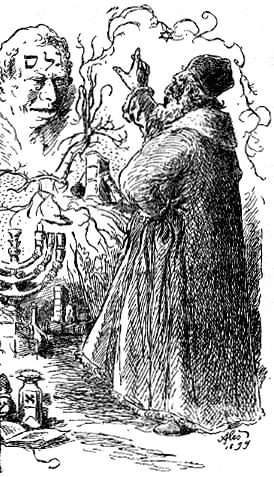
Today, Maharal’s image is bound up inextricably with the legend of the Golem, an anthropoid brought to life through magical means, though this association is late. The idea of a golem—Hebrew for “unformed”—is perhaps first to be found in the commentary of R. Eleazar of Worms on Sefer Yetzirah, the foundational and early mystical treatise that inspired Kabbalists (and not a few rationalists) through the ages. In fact, this medieval mention likely builds upon earlier traditions passed down alongside the enigmatic Sefer Yetzirah. Maharal himself mentions a golem in his ḥiddushim on the aggadot of the Talmudic tractate of Sanhedrin,1 perhaps a clue to its later association with him. In any case, legends about the Maharal and his Golem are not reported by any contemporary sixteenth-century sources and only start circulating more widely in the eighteenth century. It is the 1909 pamphlet titled Nifla’ot Maharat (The Wonders of the Maharal) that contains the version of the story most widely known today, likely written by its printer, Yehudah Yudel Rosenberg, a Polish rabbi, based upon purported manuscripts. He named Maharal’s golem “Yosele Golem.”
(I previously wrote about one of the Maharal’s works, his Ner Mitzvah on Hanukkah, including a brief sketch of his life, here:)

The Turn towards Mishnah and Aggadah
Maharal staked several unusual claims that are key to his personality and oeuvre. The first was pedagogical: students should not be taught advanced material without appropriate scaffolding and intellectual maturity. Related to this in part, he eschewed pilpul, the popular method of Talmud study of his day which relied upon brilliant, exacting, and largely academic distinctions that purported to solve minute problems of apparent contradiction or conceptual confusion in the text. And finally, Maharal insisted on not relying solely on codes of law and returning to the sources of halakhah. It was perhaps this tendency that led him to institute circles for the study of the Mishnah, which briefly flowered among Jews in early modern Europe, particularly Italy, after Rambam’s medieval attempt at centering the Mishnah as the source of the law largely failed.
Another characteristically early modern interest of Maharal’s was his focus on the aggadic, or narrative, sections of rabbinic literature. Rather than view these stories as edifying but ultimately interstitial, even somewhat diversionary among the more pertinent legal discussions, Maharal found the aggadeta in the Talmud to be the source of profound teaching. Many of his works expound sayings and stories of the sages, to such an extent that it may be said that he viewed Jewish thought to arise from this source material. A renewed interest in aggadah would become characteristic of Jewish early modernity, as realized in the popular Ein Ya’akov, a compilation of all the aggadot in the Babylonian Talmud.
A Natively Jewish Philosophy?
That which is conventionally thought of as “Jewish philosophy” has a decided rationalist bent: it is systematizing and logically-oriented in the manner of the Greek philosophy which so profoundly influenced Western thought. This is, of course, because the beginnings of Jewish philosophical writing in the Middle Ages were influenced by contact with classical Greek thought, as mediated through Islam. Sa’adiah Gaon—and I think there is a strong case to be made for all of Jewish philosophy as a series of footnotes on Sa’adiah2—penned the book that we’ve come to know as Emunot ve-De’ot (The Book of Beliefs and Opinions) in response to Kalām, a Scholastic movement in Islam which applied rationalizing methodology to revelatory tradition. Rambam’s treatise-form Moreh ha-Nevukhim (Guide of the Perplexed)—again, as we’ve come to call it—is a transmutation of Aristotelian thought and methodology to sit with Jewish ideas.
More recently, scholars of Jewish thought have insisted on calling the field just that: Jewish thought, in order to encompass the totality of speculative Jewish thought, which is not limited to rationalism in the Greco-Islamic tradition but includes Midrashic theological exuberance, medieval theosophic Kabbalah, Hasidic homilies, and much more. Maharal, however, has been somewhat exempt from inclusion among classical Jewish philosophers, not least because of the way he sits between categories, defying them. Maharal was both a natural philosopher (a scientist, in modern parlance) and a Kabbalist, a traditionalist who followed deeply Jewish modes of expression and an innovator who wrote stand-alone treatises on theological subjects.
Though Maharal attained great stature in his own day and remains, after a period of neglect, an admired figure today, his singularity has meant that he had few direct intellectual heirs and difficulty being placed by intellectual historians. However, his particular brew of inherited Kabbalistic secrets and early modern scientific currents, traditional homiletics and stand-alone treatises suggests a different conclusion: perhaps Maharal is exemplary in combining Torah, including esoteric Torah, with European rationalizing tradition. Steeped in core texts and traditional aggadic exegesis, he nevertheless applied new forms of writing to them. This resulted in book-length treatments of Jewish law and lore, a kind of natively Jewish content enclosed in early modern European vessels. It engages wholly Jewish, particularistic material but in a new format.
Consider, for instance, the opening to Netzaḥ Yisrael (The Victory of Israel), Maharal’s treatise devoted to the subject redemption (a common theme in his works). Maharal begins by selecting a passage depicting a conversation of the sages (the rabbis of the Talmud):
בפרק קמא דברכות (יב ע”ב) אמר להם בן זומא לחכמים וכי מזכירין יציאת מצרים לימות המשיח, והלא כתיב “הנה ימים באים וגו’”. אמרו לו, לא שתעקר יציאת מצרים, אלא שתהא שעבוד מלכיות עיקר ויציאת מצרים טפל לה.
In the first chapter of Berakhot (12b), Ben Zoma said to the Sages: Will the Exodus from Egypt even be mentioned in the days of the Messiah? Does it not state, “Behold, days are coming, etc.”? They replied to him: It is not that the Exodus from Egypt will be uprooted, but rather that the subjugation of the kingdoms will be primary and the Exodus from Egypt secondary to it.
Netzaḥ Yisrael, Introduction (with Sefaria translation)
This rabbinic discussion becomes the site for further meaning-making. Maharal reasons:
כי מן המדריגה שקנו ישראל כשיצאו ממצרים [י]קנו עוד מדריגה יותר עליונה, ואם לא שהוציאנו ממצרים, ולקח ישראל לו לעם, לא זכו לאותה מעלה עליונה שיקנו לעתיד, כי יציאת מצרים הוא סבה בעצם אל הגאולה העתידה.
For from the spiritual level that Israel acquired when they left Egypt, they will acquire a still more supreme level, and if He had not taken us out of Egypt and taken Israel to Himself as a people, they would not have merited that supreme level that they will acquire in the future, for the Exodus from Egypt is the essential cause of the future redemption.
Netzaḥ Yisrael, Introduction
But he does not stop there; he goes on to present a theory of necessary causality based upon distinction and contrast:
כאשר הדבר הטוב נודע מהפכו ידיעה אמיתית, וכן כל הדברים נקנה הידיעה בהם מן ההפך, כי מן מראה השחור יכול לדעת מראה הלבן שהוא הפכו, וכן כל ההפכים, מן האחד נקנה הידיעה בהפך שלו. ומוסכם הוא כי ‘ידיעת ההפכים הוא אחד’. ובשביל זה אמרו בערבי פסחים (פסחים קטז.) בהגדה ‘מתחיל בגנות ומסיים בשבח’. ולמה מתחיל בגנות, רק שמפני שאין לשבח הכרה אמיתית רק מן ההפך. ולכן אין לפרש ענין הגאולה האחרונה, אם לא שנבאר ענין הגלות והחורבן, שבזה יוודע הטוב והתשועה שאנו מקוין. וכאשר אנו באים לבאר ענין הגלות ידיעה אמיתית, צריך לבאר קודם הסבה לגלות, והדברים השייכים אל הגלות:
When a good thing is known from its opposite, that is true knowledge. The knowledge of all things is acquired from their opposite. It is from the appearance of black that one can gain knowledge of the appearance of white. And similarly with all opposites. From one is acquired the knowledge of its opposite. It is widely accepted that “the knowledge of opposites is all one thing”. Because of this, the [Sages] say in Arvei Pesaḥim [The final chapter of Babylonian Talmud Tractate Pesaḥim] that in the Haggadah “one begins with disgrace [genut] and concludes with praise [shevaḥ].” Why do they begin with disgrace? Only because true praise can only be recognized from its opposite. Therefore, we cannot explain the the concept of the final redemption [geulah], without explaining the concept of exile [galut] and ḥurban [destruction of the Jerusalem Temple]. It is by this means that we can come to know the goodness and salvation which we hope for. When we come to explain the concept of exile with true knowledge, we will need to start with the cause of the exile, and matters connected to the exile.
Netzaḥ Yisrael, chapter 1
There is a whole theology and even theodicy here, deeply inflected with the Maharal’s interest in and belief in the centrality of the “the natural order,” a recurrent phrase in his work. It arises from aggadic portions of the Talmud, from which Maharal pulls out abstract themes and philosophical puzzles. It seeks to make sense of Israel’s suffering, even as it underscores its coming redemption, and to expand upon classical discussions, like the idea of beginning the Passover Seder with disgrace and ending it with praise, by instilling them with discussions of natural causality. This type of writing is at once deeply Jewish and notably philosophical.
Reads and Resources
In English, a good place to start with Maharal is Byron Sherwin’s Mystical Theology and Social Dissent: The Life and Works of Judah Loew of Prague (Littman, 1982).
An overview of Maharal’s many works is available from the VBM (Gush).
A good selection of Maharal’s works is found on Sefaria, including the Gur Aryeh, Be’er ha-Golah, Netivot Olam, and many more.
Sefer Ḥiddushei Aggadot Maharal Mi-Prague (Bnei Berak, 1980), vol. 2, p. 166, cited by Moshe Idel in Golem: Jewish Magical and Mystical Traditions on the Artificial Anthropoid (State University of New York Press, 1990; expanded ed. Ktav, 2019), 107.
To borrow Alfred North Whitehead’s unforgettable, and in my view quite accurate, quip. I’m currently ensconced in his Process and Reality which is mind-blowing in the best way.
Great article as always. Curious why you quote R' Eliezer of Worms as the earliest source of a Golem and not the Talmud in Sanhedrin here: https://www.sefaria.org/Sanhedrin.65b.17?lang=en&with=all&lang2=en ?
Thank you for the Whitehead quip about סעדיה גאון, which I can appreciate as such, notwithstanding that I am rather clueless about philosophy (in general, and about Jewish philosophy just slightly less so). // Thanks also especially for making your footnote links bidirectional. (That too evinces a certain philosophy, of which kind I find myself on decidely firmer ground. ;-)